

One of the biggest myths in youth basketball development today is the belief that more games automatically lead to more improvement.
It’s easy to understand why. Parents want their kids competing. Players love game day. Coaches and youth basketball programs often promote packed schedules filled with tournaments and weekends on the road.
The assumption is simple:
More games = More growth.
But in reality, that’s often not the case.
What Actually Creates Growth in Youth Basketball?
Real growth comes from quality repetition, purposeful basketball training, skill development, and consistent coaching feedback.
Games can be a valuable part of player development, but only when they’re supported by the right environment.
Too often, youth basketball games follow a familiar pattern. The ball ends up in the hands of the strongest one or two players, while everyone else settles into a supporting role. Those players may hustle, defend, rebound, and fill space, but they aren’t always given opportunities to make decisions, take risks, or develop new skills.
As a result, many players spend entire seasons competing without significantly improving their basketball skills, confidence, or understanding of the game.
Games Alone Don't Teach Basketball Skills
For competition to lead to meaningful basketball player development, several things need to happen outside of the game:
- • Quality practice time
- • Basketball skills training tailored to a player’s current level
- • Opportunities to make mistakes and learn from them
- • Coaching feedback that goes beyond a quick timeout
- • Clear goals and objectives

Without those pieces in place, games become more about showcasing current abilities than developing new ones.
A game doesn’t magically create skills. It simply reveals the skills a player has developed through practice. Competition is where skills are tested, not where they are built.
The Hidden Cost of Too Much Competition
When players compete too often without enough development time, the consequences can be significant.
Confidence starts to drop. Players begin comparing themselves to others instead of focusing on improvement. The excitement of competition slowly turns into pressure. Pressure becomes expectation. Expectation becomes disappointment.
Over time, some young athletes lose the very thing that got them involved in sports in the first place: Their love of the game.
No parent signs their child up hoping they’ll lose confidence, burn out, or stop enjoying basketball. Yet that outcome is more common than many realize when basketball development takes a back seat to competition.
The Current State of Youth Basketball
After decades of involvement in youth basketball, one thing has become increasingly clear: The balance between player development and competition may be more out of sync today than it has ever been.
The commercialization of youth sports has created an environment where everyone feels pressure to play more games, join more teams, travel more weekends, and move into “elite” or “select” basketball programs as quickly as possible.
The problem isn’t competition itself. The problem is when competition replaces development.
A player’s growth isn’t determined by the logo on their jersey, how many tournaments they play, or whether they’re on an “elite” team. Growth comes from the work they put in, the habits they build, and the quality guidance they receive, not the price tag of a team.
More games do not equal more growth. Better basketball development equals more growth.
The most successful youth basketball training environments don’t eliminate competition. They simply put competition in its proper place.
Practice, skill development, feedback, and confidence-building should make up the foundation. Games should be the opportunity to apply what has been learned.
Keeping Basketball in Balance
Basketball can provide incredible benefits beyond the court.
It can teach discipline, build confidence, create lifelong friendships, improve health and wellness, and become a game that players enjoy for decades.
But that only happens when development stays at the center of the process. As parents, it’s important to regularly evaluate where your time, money, and energy are going. Ask yourself:
- • Is my child improving?
- • Are they building confidence?
- • Are they learning new skills?
- • Do they still love coming to the gym?
- • Is this experience aligned with their goals?
Those questions matter far more than how many games are on the schedule.
An Alternative Approach to Basketball Player Development
At Watts Basketball Academy, we believe development should come before exposure.
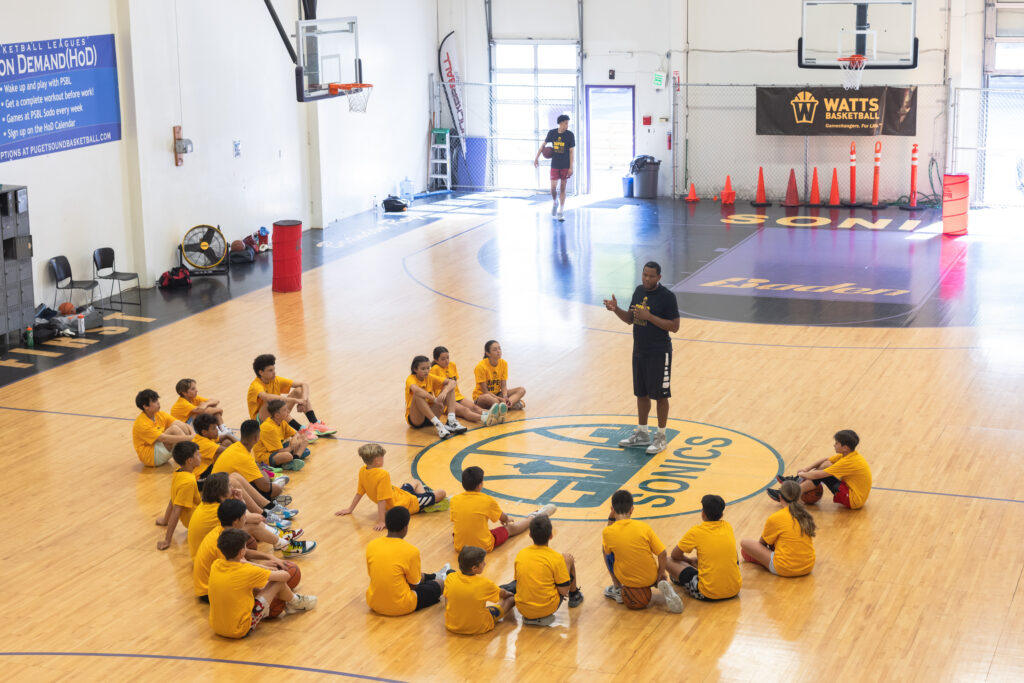
Our focus is on meeting players where they are, understanding their goals, and creating a pathway for long-term basketball development. Through basketball skills training, quality coaching, purposeful practice, and a supportive community, we help players build both confidence and competence on the court.

Because the goal isn’t simply to play more basketball.
The goal is to become a better player, develop a lifelong love for the game, and enjoy the journey along the way.
If you’re looking for a youth basketball program that values long-term development over short-term results, Watts Basketball Academy is built for exactly that purpose.
We help athletes build skills, confidence, and a lifelong love for the game through an approach that prioritizes development, meaningful coaching, and steady growth.
Because the goal isn’t just to play more basketball.
It’s to become the best version of yourself through basketball.
Learn More About Watts Basketball Academy
Discover a better path for youth basketball development, basketball skills training, and long-term player growth. Learn how Watts Basketball Academy helps athletes build confidence, improve performance, and develop a lifelong love for the game.